
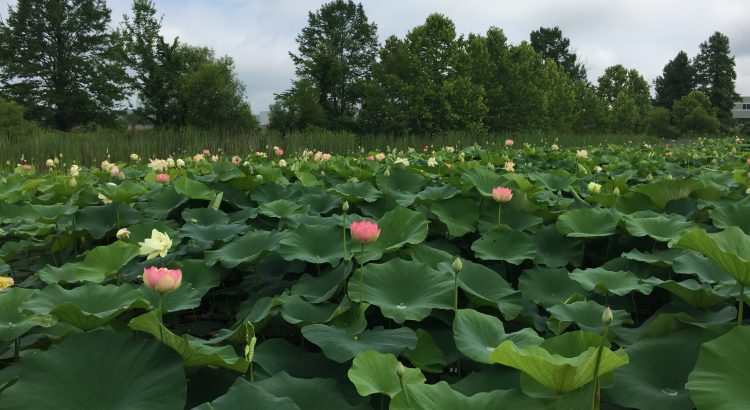
“Seven ecosystem sanctuaries—open to researchers for ecological studies and the general public for environmental education—are the heart of the National Environmental Research Park Program managed by the Department of Energy (DOE). The program was established in the 1970s in response to recommendation from environmental visionaries—citizens, scientists, and members of Congress—to set aside land for ecosystem perseveration and study. At that time, DOE’s Research Park Program was one of the few formal efforts created to protect land for research and education.”
—United States Department of Energy, 1994
Publications From the Oak Ridge NERP:
| Article Title | Publication Year | Area | Citation Count |
|---|---|---|---|
| Unraveling the influence of microbial necromass on subsurface microbiomes: metabolite utilization and community dynamics | 2025 | Area 3 (35.97716498 N, ?84.27327938 W) | 2 |
| Screening evaluation of the ecological risks to terrestrial wildlife associated with a coal ash disposal site | 2002 | Coal Ash Pond | 20 |
| Advancing wildlife connectivity in land use planning: a case study with four-toed salamanders | 2023 | EMDF | 5 |
| Habitat disturbance at explosives-contaminated ranges | 2009 | Firing Range | 0 |
| Multispecies contaminant transport in undisturbed columns of weathered, fractured saprolite | 1999 | SWSA-7 | 1 |
| Microbial communities in contaminated sediments, associated with bioremediation of uranium to submicromolar levels | 2008 | Uranium Spill Site | 155 |
| Natural attenuation of trichloroethylene in fractured shale bedrock | 2003 | WAG5 | 40 |
| The consequences of alternative environmental management goals: A non-linear programming analysis of nuclear weapons legacy clean-up at Oak Ridge National Laboratory | 2000 | Weapons Complex | 2 |
| Quantitative Representativeness and Constituency of the Long-Term Agroecosystem Research Network and Analysis of Complementarity with Existing Ecological Networks | 2023 | NEON Sites at ORR | 20 |
| SoDaH: The SOils DAta Harmonization database, an open-source synthesis of soil data from research networks, version 1.0 | 2021 | NEON Sites at ORR | 17 |
| The landscape of soil carbon data: Emerging questions, synergies and databases | 2019 | NEON Sites at ORR | 28 |
| Leveraging Environmental Research and Observation Networks to Advance Soil Carbon Science | 2019 | NEON Sites at ORR | 20 |
| Thermal performance of gas-filled panels with reflective surfaces installed in an attic | 2007 | ORNL | 4 |
| Importance of Window Installation in Residential Building Envelopes Having Continuous External Insulation in Order to Realize Energy Efficiency | 2024 | ORNL | 0 |
| A review of high R-value wood framed and composite wood wall technologies using advanced insulation techniques | 2014 | ORNL | 30 |
| Stochastic estimation of aquifer geometry using seismic refraction data with borehole depth constraints | 2010 | ORNL | 18 |
| Relating fish health and reproductive metrics to contaminant bioaccumulation at the Tennessee Valley Authority Kingston coal ash spill site | 2016 | Clinch River | 11 |
| Influence of metal(loid) bioaccumulation and maternal transfer on embryo-larval development in fish exposed to a major coal ash spill | 2016 | Clinch River | 8 |
| Selenium bioaccumulation in fish exposed to coal ash at the Tennessee Valley Authority Kingston spill site | 2014 | Clinch River | 20 |
| Biosensors for rapid monitoring of primary-source drinking water using naturally occurring photosynthesis | 2002 | Clinch River | 55 |
| Time-integrated, flux-based monitoring using semipermeable membrane devices to estimate the contribution of industrial facilities to regional polychlorinated biphenyl budgets | 2000 | Clinch River | 18 |
| Spatial and temporal trends in contaminant concentrations in Hexagenia nymphs following a coal ash spill at the Tennessee Valley Authority's Kingston Fossil Plant | 2016 | Emory River/Clinch | 8 |
| Bacterial community shift and coexisting/coexcluding patterns revealed by network analysis in a uranium-contaminated site after bioreduction followed by reoxidation | 2018 | IFRC | 43 |
| Dynamic Succession of Groundwater Functional Microbial Communities in Response to Emulsified Vegetable Oil Amendment during Sustained In Situ U(VI) Reduction | 2015 | IFRC | 23 |
| High-Quality Draft Genome Sequence of Desulfovibrio carbinoliphilus FW-101-2B, an Organic Acid-Oxidizing Sulfate-Reducing Bacterium Isolated from Uranium(VI)-Contaminated Groundwater | 2015 | IFRC | 5 |
| Exometabolite niche partitioning among sympatric soil bacteria | 2015 | IFRC | 207 |
| Lateral Gene Transfer in a Heavy Metal-Contaminated-Groundwater Microbial Community | 2016 | IFRC | 82 |
| Dynamic Succession of Groundwater Sulfate-Reducing Communities during Prolonged Reduction of Uranium in a Contaminated Aquifer | 2017 | IFRC | 37 |
| Draft Genome Sequences of Two Janthinobacterium lividum Strains, Isolated from Pristine Groundwater Collected from the Oak Ridge Field Research Center | 2017 | IFRC | 14 |
| Temporal Dynamics of In-Field Bioreactor Populations Reflect the Groundwater System and Respond Predictably to Perturbation. Environmental Science & Technology | 2017 | IFRC | 21 |
| Complete genome sequence of Pseudomonas stutzeri strain RCH2 isolated from a Hexavalent Chromium [Cr(VI)] contaminated site | 2017 | IFRC | 28 |
| Microbial Functional Gene Diversity Predicts Groundwater Contamination and Ecosystem Functioning | 2018 | IFRC | 77 |
| High spatiotemporal variability of bacterial diversity over short time scales with unique hydrochemical associations within a shallow aquifer | 2019 | IFRC | 34 |
| Nitrate-Utilizing Microorganisms Resistant to Multiple Metals from the Heavily Contaminated Oak Ridge Reservation | 2019 | IFRC | 17 |
| Native plasmid-encoded mercury resistance genes are functional and demonstrate natural transformation in environmental bacterial isolates | 2019 | IFRC | 16 |
| Large Circular Plasmids from Groundwater Plasmidomes Span Multiple Incompatibility Groups and Are Enriched in Multimetal Resistance Genes | 2019 | IFRC | 58 |
| Effects of Cone Penetrometer Testing on Shallow Hydrogeology at a Contaminated Site | 2022 | IFRC | 4 |
| Genotype to ecotype in niche environments: Adaptation of Arthrobacter to carbon availability and environmental conditions | 2022 | IFRC | 27 |
| Environmental stress mediates groundwater microbial community assembly | 2023 | IFRC | 128 |
| Sediment and Groundwater Metagenomes from Subsurface Microbial Communities from the Oak Ridge National Laboratory Field Research Center | 2025 | IFRC | 0 |
| Modest functional diversity decline and pronounced composition shifts of microbial communities in a mixed waste-contaminated aquifer | 2025 | IFRC | 2 |
| Emergence and disruption of cooperativity in a denitrifying microbial community | 2025 | IFRC | 1 |
| Geochemical and geophysical responses during the infiltration of fresh water into the contaminated saprolite of the Oak Ridge Integrated Field Research Challenge site, Tennessee | 2013 | IFRC | 12 |
| Hydrogeophysical investigations of the former S-3 ponds contaminant plumes, Oak Ridge integrated field research challenge site, Tennessee | 2013 | IFRC | 32 |
| Genome sequences for three denitrifying bacterial strains isolated from a uranium- and nitrate-contaminated subsurface environment | 2013 | IFRC | 13 |
| Petrophysical properties of saprolites from the Oak Ridge Integrated Field Research Challenge site, Tennessee | 2013 | IFRC | 38 |
| Denitrifying bacteria from the genus Rhodanobacter dominate bacterial communities in the highly contaminated subsurface of a nuclear legacy waste site | 2012 | IFRC | 196 |
| Bioreduction and immobilization of uranium in situ: A case study at a USA Department of Energy radioactive waste site, Oak Ridge, Tennessee | 2011 | IFRC | 12 |
| Complete genome sequence of Anaeromyxobacter sp. Fw109-5, an anaerobic, metal-reducing bacterium isolated from a contaminated subsurface environment | 2015 | IFRC | 21 |
| Estimating Reaction Rate Coefficients Within a Travel-Time Modeling Framework | 2011 | IFRC | 5 |
| Development of a joint hydrogeophysical inversion approach and application to a contaminated fractured aquifer | 2006 | IFRC | 44 |
| Isolation and physiology of bacteria from contaminated subsurface sediments | 2010 | IFRC | 69 |
| Significant association between sulfate-reducing bacteria and uranium-reducing microbial communities as revealed by a combined massively parallel sequencing-indicator species approach ? | 2010 | IFRC | 101 |
| Mineralogical characterization of saprolite at the FRC background site in Oak Ridge, Tennessee | 2009 | IFRC | 15 |
| Detection and quantification of Geobacter lovleyi strain SZ: Implications for bioremediation at tetrachloroethene- and uranium-impacted sites | 2007 | IFRC | 53 |
| Pilot-scale in situ bioremedation of uranium in a highly contaminated aquifer. 2. Reduction of U(VI) and geochemical control of U(VI) bioavailability | 2006 | S3 Ponds | 250 |
| Pilot-scale in situ bioremediation of uranium in a highly contaminated aquifer. 1. Conditioning of a treatment zone | 2006 | S3 Ponds | 166 |
| Characterization of a Metal-Resistant Bacillus Strain with a High Molybdate Affinity ModA from Contaminated Sediments at the Oak Ridge Reservation | 2020 | S3 Ponds | 19 |
| Ecophysiological and genomic analyses of a highly abundant Bacillus cereus strain reveal niche adaptation to a mixed waste contaminated subsurface environment | 2022 | S3 Ponds | 8 |
| Mixed Nitrate and Metal Contamination Influences Operational Speciation of Toxic and Essential Elements | 2023 | S3 Ponds | 2 |
| Sap velocity and canopy transpiration in a sweetgum stand exposed to Free-Air CO2 Enrichment (FACE) | 2001 | FACE | 101 |
| Stem respiration increases in CO2-enriched sweetgum trees | 2002 | FACE | 56 |
| Environmental and stomatal control of photosynthetic enhancement in the canopy of a sweetgum (Liquidambar styraciflua L.) plantation during 3 years of CO2 enrichment | 2002 | FACE | 128 |
| Sensitivity of stomatal and canopy conductance to elevated CO2 concentration - Interacting variables and perspectives of scale | 2002 | FACE | 153 |
| Net primary productivity of a CO2-enriched deciduous forest and the implications for carbon storage | 2002 | FACE | 199 |
| Leaf dynamics of a deciduous forest canopy: No response to elevated CO 2 | 2003 | FACE | 106 |
| Soil nitrogen cycling under elevated CO2: A synthesis of forest face experiments | 2003 | FACE | 117 |
| Fine-root production dominates response of a deciduous forest to atmospheric CO2 enrichment | 2004 | FACE | 348 |
| Persistent stimulation of photosynthesis by elevated CO2 in a sweetgum (Liquidambar styraciflua) forest stand | 2004 | FACE | 63 |
| Fine-root respiration in a loblolly pine and sweetgum forest growing in elevated CO2 | 2004 | FACE | 76 |
| Contrasting responses of forest ecosystems to rising atmospheric CO2: Implications for the global C cycle | 2005 | FACE | 75 |
| Nitrogen uptake, distribution, turnover, and efficiency of use in a CO 2-enriched sweetgum forest | 2006 | FACE | 106 |
| Forest response to elevated CO2 is conserved across a broad range of productivity | 2006 | FACE | 859 |
| Increases in nitrogen uptake rather than nitrogen-use efficiency support higher rates of temperate forest productivity under elevated CO2 | 2007 | FACE | 348 |
| Nitrogen limitation in a sweetgum plantation: Implications for carbon storage at ORNL FACE | 2008 | FACE | 52 |
| Tracking the rhythm of the seasons in the face of global change: phenological research in the 21st century | 2008 | FACE | 433 |
| Assessment of 10 years of CO2 fumigation on soil microbial communities and function in a sweetgum plantation | 2009 | FACE | 76 |
| Forest fine-root production and nitrogen use under elevated CO2: Contrasting responses in evergreen and deciduous trees explained by a common principle | 2009 | FACE | 67 |
| Belowground fate of 15N injected into sweetgum trees (Liquidambar styraciflua) at the ORNL FACE experiment | 2009 | FACE | 13 |
| CO2enhancement of forest productivity constrained by limited nitrogen availability | 2010 | FACE | 822 |
| Ecohydrologic impact of reduced stomatal conductance in forests exposed to elevated CO2 | 2011 | FACE | 96 |
| Litterfall 15N abundance indicates declining soil nitrogen availability in a Free-Air CO2 Enrichment experiment | 2011 | FACE | 56 |
| Ecological Lessons from Free-Air CO2 Enrichment (FACE) Experiments | 2011 | FACE | 776 |
| Variation in foliar nitrogen and albedo in response to nitrogen fertilization and elevated CO2 | 2012 | FACE | 21 |
| Plant root distributions and nitrogen uptake predicted by a hypothesis of optimal root foraging | 2012 | FACE | 67 |
| Stored carbon partly fuels fine-root respiration but is not used for production of new fine roots | 2013 | FACE | 80 |
| Forest water use and water use efficiency at elevated CO2: A model-data intercomparison at two contrasting temperate forest FACE sites | 2013 | FACE | 311 |
| Elevated CO2 increases tree-level intrinsic water use efficiency: Insights from carbon and oxygen isotope analyses in tree rings across three forest FACE sites | 2013 | FACE | 226 |
| Where does the carbon go? A model-data intercomparison of vegetation carbon allocation and turnover processes at two temperate forest Free-Air CO2 Enrichment sites | 2014 | FACE | 239 |
| Comprehensive ecosystem model-data synthesis using multiple data sets at two temperate forest Free-Air CO2 Enrichment experiments: Model performance at ambient CO2 concentration | 2014 | FACE | 98 |
| Evaluation of 11 terrestrial carbon-nitrogen cycle models against observations from two temperate Free-Air CO2 Enrichment studies | 2014 | FACE | 340 |
| Effects of long-term elevated CO2 treatment on the inner and outer bark chemistry of sweetgum (Liquidambar styraciflua L.) trees | 2015 | FACE | 4 |
| Carbon dioxide stimulation of photosynthesis in Liquidambar styraciflua is not sustained during a 12-year field experiment | 2015 | FACE | 65 |
| Chemical and anatomical changes in Liquidambar styraciflua L. xylem after long term exposure to elevated CO2 | 2015 | FACE | 35 |
| Model-data synthesis for the next generation of forest free-air CO2 enrichment (FACE) experiments | 2016 | FACE | 276 |
| Endogeic earthworm densities increase in response to higher fine-root production in a forest exposed to elevated CO2 | 2018 | FACE | 11 |
| Microbial functional genes commonly respond to elevated carbon dioxide | 2020 | FACE | 27 |
| Forest stand and canopy development unaltered by 12 years of CO2enrichment | 2022 | FACE | 21 |
| Getting allometry right at the Oak Ridge Free-Air CO2 Enrichment experiment: Old problems and new opportunities for global change experiments | 2024 | FACE | 1 |
| Investigating habitat value to inform contaminant remediation options: Case study | 2008 | ETTP | 3 |
| Investigating habitat value to inform contaminant remediation options: Approach | 2008 | ETTP | 14 |
| Physicochemical and mineralogical characterization of uranium-contaminated soils | 2000 | ETTP | 57 |
| Soil - landscape relationships at the lower reaches of a watershed at Bear Creek near Oak Ridge, Tennessee | 2001 | Bear Creek | 22 |
| Factors controlling evaporation and energy partitioning beneath a deciduous forest over an annual cycle | 2000 | Bear Creek | 144 |
| Small and mighty: adaptation of superphylum Patescibacteria to groundwater environment drives their genome simplicity | 2020 | Bear Creek | 338 |
| Integrated characterization of subsurface media from locations up- and down-gradient of a uranium-contaminated aquifer | 2020 | Bear Creek | 20 |
| Effects of bioaccumulation of PCBS on biodiversity and distribution of fish in two creeks in east Tennessee (USA) | 2001 | East Fork Poplar Creek, Bear creek | 6 |
| Use of in-field bioreactors demonstrate groundwater filtration influences planktonic bacterial community assembly, but not biofilm composition | 2018 | Bear Creek | 10 |
| Effect of moisture on leaf litter decomposition and its contribution to soil respiration in a temperate forest | 2007 | Bear Creek | 60 |
| Iron- and Aluminum-Induced Depletion of Molybdenum in Acidic Environments Impedes the Nitrogen Cycle | 2019 | Entire Oak Ridge Reservation | 37 |
| Mechanism across scales a holistic modeling framework integrating laboratory and field studies for microbial ecology | 2021 | Entire Oak Ridge Reservation | 33 |
| Ecological connectivity and in-kind mitigation in a regulatory decision framework: A case study with an amphibian habitat specialist | 2025 | Entire Oak Ridge Reservation | 1 |
| Comparing land cover and interior forests on contaminated land and the surrounding region: Oak Ridge Reservation as a case study | 2023 | Entire Oak Ridge Reservation | 5 |
| Multidecadal Biological Monitoring and Abatement Program assessing human impacts on aquatic ecosystems within the Oak Ridge Reservation in eastern Tennessee, USA | 2021 | Entire Oak Ridge Reservation | 7 |
| Airborne geophysical surveying for hazardous waste site characterization on the Oak Ridge Reservation, Tennessee | 2021 | Entire Oak Ridge Reservation | 34 |
| Iron- and aluminium-induced depletion of molybdenum in acidic environments impedes the nitrogen cycle | 2019 | Entire Oak Ridge Reservation | 22 |
| Oak Ridge Reservation environmental protection rad neshaps radionuclide inventory web database and rad neshaps source and dose database | 2017 | Entire Oak Ridge Reservation | 1 |
| Spatial and temporal relationships between deer harvest and deer-vehicle collisions at Oak Ridge Reservation, Tennessee | 2014 | Entire Oak Ridge Reservation | 7 |
| Simulation of carbon cycling, including dissolved organic carbon transport, in forest soil locally enriched with 14C | 2012 | Entire Oak Ridge Reservation | 44 |
| Low dissolved organic carbon input from fresh litter to deep mineral soils | 2007 | Entire Oak Ridge Reservation | 79 |
| Temperature-independent diel variation in soil respiration observed from a temperate deciduous forest | 2007 | Entire Oak Ridge Reservation | 137 |
| Alternative approach for establishing acceptable thresholds on macroinvertebrate community metrics | 2005 | Entire Oak Ridge Reservation | 17 |
| CdEDTA2- adsorption to weathered shale-limestone saprolite: modelling the adsorption mechanism and effect of al-oxide co-dissolution on fe-oxide dissolution dynamics | 2005 | Entire Oak Ridge Reservation | 4 |
| Cavity detection using seismic refraction tomography: Can it be done? | 2005 | Entire Oak Ridge Reservation | 1 |
| Plume and lithologic profiling with surface resistivity and seismic tomography | 2005 | Entire Oak Ridge Reservation | 35 |
| Assessment of non-native invasive plant species on the United States Department of Energy Oak Ridge National Environmental Research Park | 2003 | Entire Oak Ridge Reservation | 31 |
| Evaluation of refraction tomography codes for near-surface applications | 2003 | Entire Oak Ridge Reservation | 10 |
| A comparison of landscape structure inside and outside the gates: Analysis of the regional landscapes of four US Department of Energy facilities using US Geological Survey quadrangle maps and FRAGSTATS | 2003 | Entire Oak Ridge Reservation | 1 |
| Landscape level differences in soil carbon and nitrogen: Implications for soil carbon sequestration | 2002 | Entire Oak Ridge Reservation | 57 |
| A simple stream monitoring technique based on measurements of semiconservative properties of water | 2001 | Entire Oak Ridge Reservation | 14 |
| Radiological benchmarks for effects on aquatic biota at the Oak Ridge Reservation | 2000 | Entire Oak Ridge Reservation | 7 |
| Hydraulic performance analysis of a multiple injection-extraction well system | 2007 | Entire Oak Ridge Reservation | 27 |
| A Slow-Release Substrate Stimulates Groundwater Microbial Communities for Long-Term in Situ Cr(VI) Reduction | 2015 | Ground water at ORR | 23 |
| Rapid detection of microbial cell abundance in aquatic systems | 2016 | Ground water at ORR | 17 |
| Using in-field bioreactors to monitor microbial community dynamic shifts with geochemical perturbations | 2020 | Ground water at ORR | 10 |
| In situ demonstration of sustained adaptation of a natural microbial community to remove nitrate from groundwater | 2021 | Ground water at ORR | 10 |
| Genomic features and pervasive negative selection in Rhodanobacter strains isolated from nitrate and heavy metal contaminated aquifer | 2022 | Ground water at ORR | 27 |
| Fitness factors impacting survival of a subsurface bacterium in contaminated groundwater | 2023 | Ground water at ORR | 1 |
| Reproducible responses of geochemical and microbial successional patterns in the subsurface to carbon source amendment | 2024 | Ground water at ORR | 11 |
| Genomic and environmental controls on Castellaniella biogeography in an anthropogenically disturbed subsurface | 2024 | Ground water at ORR | 3 |
| Molecular mechanisms and environmental adaptations of flagellar loss and biofilm growth of Rhodanobacter under environmental stress | 2024 | Ground water at ORR | 10 |
| In-field bioreactors demonstrate dynamic shifts in microbial communities in response to geochemical perturbations | 2020 | Ground water at ORR | 6 |
| Rapid detection of microbial cell abundance in aquatic systems | 2016 | Ground water at ORR | 14 |
| Uranium removal from contaminated groundwater by synthetic resins | 2008 | Ground water at ORR | 64 |
| Measurement of dissolved H2, O2, and CO2 in groundwater using passive samplers for gas chromatographic analyses | 2007 | Ground water at ORR | 25 |
| U(VI) adsorption to heterogeneous subsurface media: Application of a surface complexation model | 2002 | Ground water at ORR | 193 |
| Mixed waste contamination selects for a mobile genetic element population enriched in multiple heavy metal resistance genes | 2024 | Ground water at ORR | 4 |
| Variation in natural attenuation rates of polychlorinated biphenyls (PCBs) in fish from streams and reservoirs in East Tennessee observed over a 35-year period | 2022 | lower-order tributaries on the Oak Ridge Reservation | 4 |
| Genomic Features and Pervasive Negative Selection in Rhodanobacter Strains Isolated from Nitrate and Heavy Metal Contaminated Aquifer | 2022 | Ground water at ORR | 21 |
| From legacy contamination to watershed systems science: a review of scientific insights and technologies developed through DOE-supported research in water and energy security | 2022 | Entire Oak Ridge Reservation | 22 |
| Switchgrass selection as a " model" bioenergy crop: A history of the process | 2010 | Entire Oak Ridge Reservation | 203 |
| Probing the active fraction of soil microbiomes using BONCAT-FACS | 2019 | Soil Collected at ORR | 99 |
| Microbial community changes in response to ethanol or methanol amendments for U(VI) reduction | 2010 | Soil Collected at ORR | 28 |
| Effects of nitrate on the stability of uranium in a bioreduced region of the subsurface | 2010 | Soil Collected at ORR | 97 |
| Surge block method for controlling well clogging and sampling sediment during bioremediation | 2013 | Entire Oak Ridge Reservation | 9 |
| Noninvasive shallow seismic source comparison for hazardous waste site investigations | 2018 | Entire Oak Ridge Reservation | 3 |
| Molybdenum availability is key to nitrate removal in contaminated groundwater environments | 2015 | Entire Oak Ridge Reservation | 37 |
| Contrasting effects of land-use and local disturbance on plant and pollinator communities in wetlands | 2025 | Entire Oak Ridge Reservation | 0 |
| Sediment and groundwater metagenomes from subsurface microbial communities from the Oak Ridge National Laboratory Oak Ridge Reservation, Oak Ridge, Tennessee, USA | 2025 | Entire Oak Ridge Reservation | 0 |
| Variability of precipitation areal reduction factors in the conterminous United States | 2020 | Entire Oak Ridge Reservation | 14 |
| Mercury and other heavy metals influence bacterial community structure in contaminated Tennessee streams | 2011 | Entire Oak Ridge Reservation | 134 |
| ForCent model development and testing using the Enriched Background Isotope Study experiment | 2010 | Entire Oak Ridge Reservation | 63 |
| Recent (<4 year old) leaf litter is not a major source of microbial carbon in a temperate forest mineral soil | 2010 | Entire Oak Ridge Reservation | 129 |
| The MODIS (Collection V005) BRDF/albedo product: Assessment of spatial representativeness over forested landscapes | 2009 | Entire Oak Ridge Reservation | 316 |
| Reduction and bacterial adsorption of dissolved mercuric ion by indigenous bacteria at the Oak Ridge Reservation site | 2021 | Ground water at ORR | 9 |
| Uncertainty quantification of machine learning models to improve streamflow prediction under changing climate and environmental conditions | 2023 | Walker Branch Watershed | 19 |
| Long-term hydrological, biogeochemical, and climatological data from Walker Branch Watershed, East Tennessee, USA | 2021 | Walker Branch Watershed | 6 |
| Temporal Variation in the Importance of a Dominant Consumer to Stream Nutrient Cycling | 2014 | Walker Branch Watershed | 19 |
| Inverse method for estimating the spatial variability of soil particle size distribution from observed soil moisture | 2010 | Walker Branch Watershed | 9 |
| Long-term successional forest dynamics: Species and community responses to climatic variability | 2010 | Walker Branch Watershed | 30 |
| Improvements of a dynamic global vegetation model and simulations of carbon and water at an upland-oak forest | 2007 | Walker Branch Watershed | 10 |
| The importance of in-stream uptake for regulating stream concentrations and outputs of N and P from a forested watershed: Evidence from long-term chemistry records for Walker Branch Watershed | 2004 | Walker Branch Watershed | 117 |
| Detection and quantification of copper-denitrifying bacteria by quantitative competitive PCR | 2004 | Walker Branch Watershed | 30 |
| Solute accumulation of chestnut oak and dogwood leaves in response to throughfall manipulation of an upland oak forest | 2002 | Walker Branch Watershed | 23 |
| Microbial incorporation of nitrogen in stream detritus | 2002 | Walker Branch Watershed | 28 |
| Leaf age affects the seasonal pattern of photosynthetic capacity and net ecosystem exchange of carbon in a deciduous forest | 2001 | Walker Branch Watershed | 252 |
| Factors controlling the timing of root elongation intensity in a mature upland oak stand | 2001 | Walker Branch Watershed | 109 |
| A six-year study of sapling and large-tree growth and mortality responses to natural and induced variability in precipitation and throughfall | 2001 | Walker Branch Watershed | 98 |
| Simulated effects of temperature and precipitation change in several forest ecosystems | 2000 | Walker Branch Watershed | 22 |
| Food resources of stream macroinvertebrates determined by natural-abundance stable C and N isotopes and a 15N tracer addition | 2000 | Walker Branch Watershed | 64 |
| Nitrogen cycling in a forest stream determined by a 15N tracer addition | 2000 | Walker Branch Watershed | 234 |
| A method for experimental heating of intact soil profiles for application to climate change experiments | 2011 | Walker Branch Watershed | 72 |
| The three phases of land use change: implications for biodiversity | 2005 | Walker Branch Watershed | 188 |
| Soil carbon and nitrogen changes in forests of Walker Branch Watershed | 2007 | Walker Branch Watershed | 43 |
| Time and frequency domain analyses of high-frequency hydrologic and chloride data in an east Tennessee watershed | 2010 | Walker Branch Watershed | 18 |
| Hurst Analysis of Hydrologic and Water Quality Time Series | 2010 | Walker Branch Watershed | 8 |
| An analysis of soil moisture dynamics using multi-year data from a network of micrometeorological observation sites | 2007 | Walker Branch Watershed | 82 |
| Assessing evapotranspiration estimates from the second Global Soil Wetness Project (GSWP-2) simulations | 2010 | Walker Branch Watershed | 24 |
| Fluxes of Reactive Gaseous Mercury Measured With a Newly Developed Method using relaxed Eddy acculation | 2006 | Walker Branch Watershed | 108 |
| Evaluation of leaf-to-canopy upscaling methodologies against carbon flux data in North America | 2012 | Walker Branch Watershed | 91 |
| Initial characterization of processes of soil carbon stabilization using forest stand-level radiocarbon enrichment | 2005 | Walker Branch Watershed | 238 |
| Interactive influences of ozone and climate on streamflow of forested watersheds | 2012 | Walker Branch Watershed | 55 |
| Spatial and seasonal variability of photosynthetic parameters and their relationship to leaf nitrogen in a deciduous forest | 2000 | Walker Branch Watershed | 472 |
| Comparing independent estimates of carbon dioxide exchange over 5 years at a deciduous forest in the southeastern United States | 2001 | Walker Branch Watershed | 71 |
| The spatial variability of energy and carbon dioxide fluxes at the floor of a deciduous forest | 2001 | Walker Branch Watershed | 57 |
| Developing a continental-scale measure of gross primary production by combining MODIS and AmeriFlux data through Support Vector Machine approach | 2007 | Walker Branch Watershed | 249 |
| Effects of light on nitrate uptake in small forested streams: diurnal and day-to-day variations | 2006 | East Fork Walker Branch | 74 |
| Drivers of nitrogen transfer in stream food webs across continents | 2017 | East Fork Walker Branch | 13 |
| Endogenous and exogenous control of ecosystem function: N cycling in headwater streams | 2008 | Walker Branch | 111 |
| Soil organic matter is principally root derived in an Ultisol under oak forest | 2021 | Walker Branch | 7 |
| The influence of air mass source on the seasonal isotopic composition of precipitation, eastern USA | 2009 | Walker Branch | 129 |
| Atmospheric mercury in the Great Smoky Mountains compared to regional and global levels | 2007 | Walker Branch | 144 |
| Inter-biome comparison of factors controlling stream metabolism | 2008 | Walker Branch | 358 |
| an uptake length be determined by nutrient addition experiments? Results from an interbiome comparison study | 2002 | Walker Branch | 168 |
| Acute seasonal drought does not permanently alter mass loss and nitrogen dynamics during decomposition of red maple (Acer rubrum L.) litter | 2002 | Walker Branch | 30 |
| Mobilization of mercury from contaminated creekbank soils | 2025 | East Fork Poplar Creek | 0 |
| The Impact of Sorbent Amendments for Mercury Remediation on the Viability of Soil Microorganisms | 2024 | East Fork Poplar Creek | 1 |
| Reconsidering mercury sources and exposure pathways to bivalves: Insights from mercury stable isotopes | 2024 | East Fork Poplar Creek | 6 |
| Geoelectric Characterization of Hyporheic Exchange Flow in the Bedrock-Lined Streambed of East Fork Poplar Creek, Oak Ridge, Tennessee | 2023 | East Fork Poplar Creek | 5 |
| Crystal lattice defects in nanocrystalline metacinnabar in contaminated streambank soils suggest a role for biogenic sulfides in the formation of mercury sulfide phases | 2023 | East Fork Poplar Creek | 5 |
| Transient Storage Model Parameter Optimization Using the Simulated Annealing Method | 2022 | East Fork Poplar Creek | 7 |
| Comparison of fiber-optic distributed temperature sensing and high-sensitivity sensor spatial surveying of stream temperature | 2021 | East Fork Poplar Creek | 13 |
| Incorporating concentration-dependent sediment microbial activity into methylmercury production kinetics modeling | 2021 | East Fork Poplar Creek | 2 |
| Increasing temperature and flow management alter mercury dynamics in East Fork Poplar Creek | 2021 | East Fork Poplar Creek | 3 |
| Geostatistical interpolation of streambed hydrologic attributes with addition of left censored data and anisotropy | 2021 | East Fork Poplar Creek | 14 |
| Use of sequential extraction and mercury stable isotope analysis to assess remobilization of sediment-bound legacy mercury | 2021 | East Fork Poplar Creek | 19 |
| Metagenome-assembled genome sequences of novel prokaryotic species from the mercury-contaminated East Fork Poplar Creek, Oak Ridge, Tennessee, USA | 2021 | East Fork Poplar Creek | 3 |
| Interaction of Soil Microbes with Organoclays and their Impact on the Immobilization of Hg under Aerobic Conditions | 2021 | East Fork Poplar Creek | 2 |
| Stream discharge and water quality data for East Fork Poplar Creek beginning 2012 | 2021 | East Fork Poplar Creek | 4 |
| Assessing Microbial Communities Related to Mercury Transformations in Contaminated Streambank Soils | 2021 | East Fork Poplar Creek | 3 |
| Ecosystem Controls on Methylmercury Production by Periphyton Biofilms in a Contaminated Stream: Implications for Predictive Modeling | 2019 | East Fork Poplar Creek | 15 |
| Methylmercury sorption onto engineered materials | 2019 | East Fork Poplar Creek | 11 |
| Scaling mercury biodynamics from individuals to populations: Implications of an herbivorous fish on mercury cycles in streams | 2019 | East Fork Poplar Creek | 6 |
| Source relationships between streambank soils and streambed sediments in a mercury-contaminated stream | 2019 | East Fork Poplar Creek | 20 |
| Identifying non-reference sites to guide stream restoration and long-term monitoring | 2018 | East Fork Poplar Creek | 14 |
| Hg isotopes reveal in-stream processing and legacy inputs in East Fork Poplar Creek, Oak Ridge, Tennessee, USA | 2018 | East Fork Poplar Creek | 42 |
| Periphyton Biofilms Influence Net Methylmercury Production in an Industrially Contaminated System | 2016 | East Fork Poplar Creek | 47 |
| Seasonal and flow-driven dynamics of particulate and dissolved mercury and methylmercury in a stream impacted by an industrial mercury source | 2016 | East Fork Poplar Creek | 30 |
| Evaluation of centrifugal ultrafilters for size fractionation of total mercury and methylmercury in freshwaters | 2013 | East Fork Poplar Creek | 3 |
| Sources of mercury in a contaminated stream-implications for the timescale of recovery | 2013 | East Fork Poplar Creek | 19 |
| Competitive ligand exchange reveals time dependant changes in the reactivity of Hg-dissolved organic matter complexes | 2012 | East Fork Poplar Creek | 27 |
| Role of a comprehensive toxicity assessment and monitoring program in the management and ecological recovery of a wastewater receiving stream | 2011 | East Fork Poplar Creek | 11 |
| Importance of data management in a long-term biological monitoring program | 2011 | East Fork Poplar Creek | 9 |
| Introduction to the Biological Monitoring and Abatement Program | 2011 | East Fork Poplar Creek | 11 |
| Long-term biological monitoring of an impaired stream: Synthesis and environmental management implications | 2011 | East Fork Poplar Creek | 22 |
| Monitoring fish contaminant responses to abatement actions: Factors that affect recovery | 2011 | East Fork Poplar Creek | 21 |
| Long-term benthic macroinvertebrate community monitoring to assess pollution abatement effectiveness | 2011 | East Fork Poplar Creek | 24 |
| Long-term water-quality changes in East Fork Poplar Creek, tennessee: Background, trends, and potential biological consequences | 2011 | East Fork Poplar Creek | 23 |
| Twenty-five years of ecological recovery of East Fork Poplar Creek: Review of environmental problems and remedial actions | 2011 | East Fork Poplar Creek | 29 |
| History of mercury use and environmental contamination at the Oak Ridge Y-12 Plant | 2011 | East Fork Poplar Creek | 129 |
| Roles of dissolved organic matter in the speciation of mercury and methylmercury in a contaminated ecosystem in Oak Ridge, Tennessee | 2010 | East Fork Poplar Creek | 92 |
| The role of periphyton in mediating the effects of pollution in a stream ecosystem | 2010 | East Fork Poplar Creek | 31 |
| Kinetic controls on the complexation between mercury and dissolved organic matter in a contaminated environment | 2009 | East Fork Poplar Creek | 111 |
| Bioaccessibility of mercury in soils | 2001 | East Fork Poplar Creek | 40 |
| Relationship between genotoxicity, mutagenicity, and fish community structure in a contaminated stream | 2000 | East Fork Poplar Creek | 48 |
| Improved yield of high molecular weight DNA coincides with increased microbial diversity access from iron oxide cemented sub-surface clay environments | 2014 | East Fork Poplar Creek | 24 |
| Effects of bioaccumulation of PCBS on biodiversity and distribution of fish in two creeks in east Tennessee (USA) | 2001 | East Fork Poplar Creek, Bear creek | 6 |
| Decreasing aqueous mercury concentrations to meet the water quality criterion in fish: Examining the water-fish relationship in two point-source contaminated streams | 2013 | East Fork Poplar Creek, White Oak Creek | 20 |
| Thermal-treated soil for mercury removal: Soil and phytotoxicity tests | 2000 | East Fork Poplar Creek | 31 |
| Application of multispectral imagery to assessment of a hydrodynamic simulation of an effluent stream entering the Clinch River | 2000 | East Fork Poplar Creek | 16 |
| Integrated watershed process model for evaluating mercury sources, transport, and future remediation scenarios in an industrially contaminated site | 2022 | East Fork Poplar Creek | 7 |
| Effects of slopes, rainfall intensity and grass cover on runoff loss of mercury from floodplain soil in Oak Ridge TN: A laboratory pilot study | 2024 | Y-12 and East Fork Poplar Creek | 10 |
| Effects of slopes, rainfall intensity and grass cover on runoff loss of mercury from floodplain soil in Oak Ridge TN: A laboratory pilot study | 2024 | Y-12 and East Fork Poplar Creek | 10 |
| Characterization of soils from an industrial complex contaminated with elemental mercury | 2013 | Y12 | 58 |
| Mass-transfer limitations for nitrate removal in a uranium-contaminated aquifer | 2005 | Y12 | 34 |
| Binding, distribution, and plant uptake of mercury in a soil from Oak Ridge, Tennessee, USA | 2006 | Y12 | 152 |
| Identification of multiple mercury sources to stream sediments near Oak Ridge, TN, USA | 2014 | Y12 | 50 |
| Changes in bacterial community structure correlate with initial operating conditions of a field-scale denitrifying fluidized bed reactor | 2006 | Waste Disposal Ponds Y12 | 50 |
| Radiocesium discharges and subsequent environmental transport at the major US weapons production facilities | 2000 | White Oak Creek | 21 |
| Stream ecosystem responses to forest leaf emergence in spring | 2001 | White Oak Creek and Walker Branch | 236 |
| Dispersal limitations on fish community recovery following long-term water quality remediation | 2016 | White Oak Creek Watershed | 11 |
| Light, nutrients, and herbivore growth in oligotrophic streams | 2010 | White Oak Creek, Walker Branch | 34 |
| Commonalities in stream connectivity restoration alternatives: an attempt to simplify barrier removal optimization | 2019 | White Oak Creek | 26 |
| Seasonal Shifts in the Use of Green and Brown Food Resources by a Dominant Stream Grazer | 2025 | Walker Branch | 0 |
| Complete genome of Pseudomonas putida strain WBB028 isolated from leaf litter | 2024 | Walker Branch | 0 |
| Influence of dual nitrogen and phosphorus additions on nutrient uptake and saturation kinetics in a forested headwater stream | 2019 | Walker Branch | 18 |
| Nitrogen processing by grazers in a headwater stream: riparian connections | 2017 | Walker Branch | 12 |
| Organic-matter decomposition along a temperature gradient in a forested headwater stream | 2016 | Walker Branch | 55 |
| Long-term data reveal patterns and controls on stream water chemistry in a forested stream: Walker Branch, Tennessee | 2012 | Walker Branch | 45 |
| Tree-ring growth and wood chemistry response to manipulated precipitation variation for two temperate Quercus species | 2012 | Walker Branch | 9 |
| Distinguishing dynamics of dissolved organic matter components in a forested stream using kinetic enrichments | 2012 | Walker Branch | 63 |
| Stream ecosystem responses to the 2007 spring freeze in the southeastern United States: Unexpected effects of climate change | 2009 | Walker Branch | 32 |
| Effects of throughfall manipulation on soil nutrient status: Results of 12 years of sustained wet and dry treatments | 2008 | Walker Branch | 29 |
| In-stream biotic control on nutrient biogeochemistry in a forested stream, West Fork of Walker Branch | 2007 | Walker Branch | 162 |
| Multiple scales of temporal variability in ecosystem metabolism rates: Results from 2 years of continuous monitoring in a forested headwater stream | 2007 | Walker Branch | 329 |
| Effects of light on NO3- uptake in small forested streams: Diurnal and day-to-day variations | 2007 | Walker Branch | 81 |
| Stream denitrification and total nitrate uptake rates measured using a field 15N tracer addition approach | 2004 | Walker Branch | 168 |
| Partitioning net ecosystem carbon exchange with isotopic fluxes of CO2 | 2001 | Walker Branch | 168 |
| Estimating uncertainty in ambient and saturation nutrient uptake metrics from nutrient pulse releases in stream ecosystems | 2016 | Walker Branch | 4 |
| You are not always what we think you eat: selective assimilation across multiple whole-stream isotopic tracer studies | 2014 | Walker Branch | 44 |
| Lithologic and pedogenic influences on porosity distribution and groundwater flow in fractured sedimentary saprolite: A new application of environmental sedimentology | 2001 | Walker Branch | 82 |
| Coupling Nutrient Uptake and Energy Flow in Headwater Streams | 2006 | Walker Branch | 162 |
| Modelled effects of precipitation on ecosystem carbon and water dynamics in different climatic zones | 2008 | Walker Branch | 158 |
| Organic matter decomposition along a temperature gradient in a forested headwater stream | 2016 | Walker Branch | 72 |
| The 2007 eastern U.S. spring freeze: increased cold damage in a warming world? | 2008 | Walker Branch | 791 |
| Importance of changing CO2, temperature, precipitation and ozone on carbon and water cycles of an upland oak forest: Incorporating experimental results into model simulations | 2005 | Walker Branch | 128 |
| Spring frost risk in a changing climate | 2008 | Walker Branch | 125 |
| Persistence of hydrologic variables and reactive stream solute concentrations in an east Tennessee watershed | 2011 | West fork of walker branch | 4 |
| Food resources of stream macroinvertebrates determined by natural-abundance stable C and N isotopes and a N-15 tracer addition | 2000 | West fork of walker branch | 99 |
| Nitrogen cycling in a forest stream determined by a N-15 tracer addition | 2000 | West fork of walker branch | 354 |
| Seasonally shifting limitation of stream periphyton: response of algal populations and assemblage biomass and productivity to variation in light, nutrients, and herbivores | 2000 | West fork of walker branch | 136 |
| Stream ecosystem responses to forest leaf emergence in spring | 2001 | White Oak Creek and Walker Branch | 236 |
| Light, nutrients, and herbivore growth in oligotrophic streams | 2010 | White Oak Creek, Walker Branch | 34 |
| Permeable environmental leaching capsules (PELCAPs) for in situ evaluation of contaminant immobilization in soil | 2006 | White Oak Creek | 4 |
| Decreasing aqueous mercury concentrations to meet the water quality criterion in fish: Examining the water-fish relationship in two point-source contaminated streams | 2013 | East Fork Poplar Creek, White Oak Creek | 20 |
| Fate of 60Co at a sludge land application site | 2008 | 10 Ha Grassland | 0 |
| Sensitivity of canopy transpiration to altered precipitation in an upland oak forest: evidence from a long-term manipulative field study | 2005 | 35 degrees 15' N and 84 degrees 17' W | 89 |
National Environmental Research Park Principles
-
The Department of Energy has stewardship for lands representing a large array of the Nation’s ecological regions
-
A corresponding array of environmental activities (including impacts) are taking place on these lands
-
A highly competent cadre of researchers are associated with these sites
-
By proper organization of research to achieve agency-mandated environmental goals, we can simultaneously aid in resolving environmental problems on-site, locally, regionally, nationally, and globally


 The Oak Ridge National Environmental Research Park is located in eastern Tennessee on the Department of Energy’s (DOE’s) Oak Ridge Reservation (ORR). The ORR is a unique and irreplaceable resource for DOE in addressing its technology and national science missions.
The Research Park is an Oak Ridge National Laboratory (ORNL) research facility that provides over 8,000 ha (20,000 acres) of ORR protected land for research and education, especially in the environmental sciences. Lying in the heart of the eastern deciduous forest ecoregion, the Research Park contains wetlands, prairies, streams, reservoirs, and other uncommon habitats in addition to upland mixed forests. Scientists working on the Research Park enjoy its many unique advantages, including a large information base and close proximity to educational institutions. They also have access to many on-site resources, such as the services of environmental scientists and the field and laboratory facilities at ORNL.
The Oak Ridge National Environmental Research Park is one in a network of seven DOE National Environmental Research Parks. It was designated an international biosphere reserve in 1989 as one of the six units of the Southern Appalachian Biosphere Reserve. It is also a Tennessee Wildlife Management Area and part of the Southern Appalachian Man and the Biosphere (SAMAB) Cooperative.
Native plants are being used in landscaping at ORNL as a major focal point of the Sustainable Campus Initiative. Native plants are better adapted to local environmental conditions and using them highlights their beauty, educates staff and guests about them, provides a unique look for ORNL, and supports many native animals. The pond on ORNL’s East Campus, for example, has been converted into a more natural environment. The addition of aquatic and shore plants, native fish, and turtles has enhanced the area. A new walkway around the pond makes it an inviting place for staff to exercise while enjoying the more natural habitat.